“Navarra, leader in Artificial Intelligence thanks to the collaboration between Technology Centers and companies”, this is how ATANA describes the conference “NavarraIAConnect – Building together an intelligent future‘”, a space around AI – organized by this Technology and Consulting Cluster – in which different Technology Centers presented projects developed in collaboration with companies from various productive sectors of Navarra, among them Human AI and the University of Navarra.
Our CTO and co-founder, Roberto Aguirre, together with Iván Cordón, Director of Innovation at DATAI – Institute of Data Science and Artificial Intelligence of the UNAV, presented how it is possible to collaborate between university and business by putting university research at the service of technological and business application thanks to the development of an AI capable of “evaluating 35 socio-emotional skills with just 1000 words, an AI platform aimed at both educational centers and companies that want to assess and enhance their team”, reports ATANA.
How you write, that’s how you are
When we talk about AI,” says Roberto Aguirre, “almost everyone associates it with technology, but not with personality, with people. We saw that it could also help in that, in the matter of seeing how people work, how artificial intelligence can be applied to this type of knowledge”.
“When you express yourself naturally, you expose yourself.”
AI applied to psycholinguistics “makes it possible to deduce the personality of someone who has written a text by analyzing writing patterns or word repetition. There are a lot of parameters.” “When you are asked to write about whatever you want and you start a narrative talking about yourself and yourself, for example, or you use the first person singular many times, or in verbs you always put positive adjectives next to it,” the personality is being reflected, because “it is relatively difficult to mask it,” Aguirre pointed out.
“From more than 35 variables, Human AI makes it possible to determine a person’s socioemotional competencies and to deduce their levels of emotional instability or neuroticism, openness or ability to collaborate, among other parameters”.
Different professional fields
Human AI is at the service of professionals who work on personal development and well-being from the socio-emotional dimension.
“At our origin it was education, to help teachers work better in the classroom, basically, but the topic of job search also came up, since your collaboration skills you are going to be able to improve if you know you have a need, obviously; if you don’t know, you can’t do it.”
“You can determine which person is able to work better in a team,” Cordón explains, referring to one of those skills most in demand by companies today. This technology can also be “very important” in the field of sports.
“Athletes don’t just have to be physically good, they have to have mental capacity.”
“As one person told us, those who fall by the wayside are not precisely because they are not physically good, but because they do not have the right personality to overcome everything they have to overcome,” and in this area, the AI “is a clear value for coaches,” Aguirre added.
Human AI was born as a research, development, and co-design project between the education, business, and university sectors. Today, it has grown into a company combining science and technology to create innovative solutions that enhance human well-being and development.
We continue to add clients and partners to our innovation ecosystem. Here, we present 12 success stories and ten testimonials from individuals and institutions that have implemented Human AI, showcasing how artificial intelligence can be a powerful catalyst for human well-being.
1. Colegio Jesuitinas | “Enhancing Personalized Guidance with AI”
“Our evaluation tool serves as a continuous improvement mechanism to support students’ learning and personal development.”
The Jesuitinas School in Pamplona has integrated the Personalized Guidance Educational Model (MEDAP) using Human AI to assess and develop students’ socio-emotional skills, enabling them to build solid, resilient life projects. Human AI plays a key role in transforming assessment systems, optimizing the measurement of competencies, and enriching the teaching-learning process by offering more precise and personalized evaluations. This integration empowers educational institutions to better support their students, facilitating comprehensive development that extends beyond academic performance.
2. CIFP del Mar | “Developing Students’ SES Competencies with AI Support”
“AI has allowed us to systematize the development of key employability skills in the maritime sector.”
In Gijón, CIFP del Mar utilizes Human AI to prepare students in critical socio-emotional competencies for their professional futures, facilitating their entry into a highly competitive job market. By offering detailed and personalized tracking, this tool tailors educational interventions to specific needs, strengthening essential soft skills and fostering greater self-awareness to prepare students for current workplace challenges.
3. Itínere Educational Network | “Creating an Improvement Plan to See Results in a Year”
“This partnership enables us to enhance the holistic development of our students and educators with ethical and responsible AI.”
In Latin America, the collaboration between Itínere Educational Network and Human AI is setting a milestone by blending pedagogical innovation with advanced technology. This pioneering alliance aims to transform the development of socio-emotional competencies through scientifically validated and ethically designed AI. This approach fosters deeper personal and academic growth while positioning the region as a leader in integrating AI into education, establishing a replicable model worldwide.
4. El Molino School | “Empowering Individuals with Intellectual Disabilities Through Human AI”
“Human AI has helped us make technology accessible for all, promoting inclusion.”
At El Molino Special Education School, inclusive innovation has materialized through Human AI’s artificial intelligence, focused on enhancing the capabilities of individuals with intellectual disabilities. This project represents significant progress in technological accessibility, enabling students to actively engage in the digital world while developing essential socio-emotional skills in a personalized manner. Human AI is creating a more inclusive educational environment, where every individual has the opportunity to reach their fullest potential.
5. IED | “Gaining Greater Objectivity in SES Measurement with Human AI”
“This tool helps us make fairer and more precise decisions in talent management.”
At IED, integrating Human AI’s artificial intelligence into the Human Resources Department has been pivotal in achieving greater objectivity when measuring socio-emotional competencies. Alex Uriarte, IED’s People and Culture Director, highlighted how this tool has optimized recruitment processes and internal evaluations, providing precision and an innovative approach that reinforces the company’s technological leadership. This collaboration positions IED at the forefront of digital transformation in talent management.
“Human AI allows us to identify and develop critical soft skills for organizational success.”
MENTHA Executive Search, a leader in high-level headhunting, has taken a decisive step by incorporating Human AI into its talent management processes. This collaboration is transforming candidate evaluation and selection by eliminating biases and providing enriched feedback. MENTHA’s focus is clear: Humanizing processes in order to highlight the true value of individuals in the workforce.
7. Work Perspectives Foundation | “Identifying Key Competencies for Development with Human AI”
“Training must go beyond methodology, focusing on purpose and virtues.”
The Skills and Virtues Program, developed by the Work Perspectives Foundation in collaboration with the University of Navarra’s Institute for Business and Humanism, focuses on developing leadership competencies from a humanistic perspective. Using Human AI, the program strengthens leaders’ core skills, making the tool essential for self-awareness and leadership growth.
8. Unibrokers | “Hosting Workshops Using AI-Driven Insights”
“Human AI’s reports are crucial for strengthening our team’s soft skills.”
At Unibrokers S.A., one of the most recognized insurance brokers in Ecuador, innovation and professional development are fundamental. With the aim of optimizing human talent and strengthening the soft skills of its team, Unibrokers has found a key strategic partner in Human AI. The detailed information on soft skills provided by Human AI reports has allowed the company to design personalized and specific workshops that are developed throughout the year, focusing on critical areas for professional growth and directly impacting the quality of customer service.
9. Ilundáin Foundation | “Exceeding All Expectations with Results”
“Human AI has transformed vocational guidance for youth in a vulnerable situation.”
The Ilundáin Haritz Berri Foundation, committed to social and labour integration of young people in vulnerable situations, has taken an innovative step by incorporating Human AI technology into its career guidance processes. The tool not only facilitates a detailed assessment of key skills for success in the workplace and in society, but also ensures a fairer and more objective selection process, eliminating self-perception biases. When technology and humanity come together, lives can be significantly transformed.
10. Private University of Santa Cruz de la Sierra (UPSA) | “Discovering and Empowering Student Talent”
“Human AI has been a powerful tool to help students understand their socio-emotional competencies and maximize their potential.”
At UPSA in Bolivia, Human AI has transformed the educational experience by enabling students to conduct in-depth self-assessments of 35 key socio-emotional competencies. This process reveals insights for students and empowers educators to enhance each individual’s strengths, marking a new milestone in higher education. Milka Costas Coordinator of the WINN Bolivia Network and Professor of Entrepreneurship and Innovation Management at UPSA shares with us how Human AI has transformed his teaching work.
11. President of the Spanish Society of Psychiatry and Mental Health | “The application of artificial intelligence to psychiatry is promising”
“Human AI offers an innovative tool for diagnosis and treatment in mental health.”
Personality is a key factor in understanding and treating many mental disorders. Manuel Martín Carrasco – psychiatrist, hospital director, president of the Spanish Society of Psychiatry and Mental Health and advisor of Human AI – highlights how Human AI’s artificial intelligence offers a unique opportunity to collaborate in the diagnosis of personality, which can be decisive in the management of these disorders. The complexity of the brain requires the integration of large volumes of data, and AI is presented as a promising tool to achieve more precise and effective interventions in the field of mental health.
12. Cala Education | “Revolutionizing Emotional Well-Being Management with AI”
“Human AI has enabled us to proactively address mental health challenges in our educational community.”
Cala Educación Perú, committed to quality and personalized education in Peru, has integrated Human AI artificial intelligence to address the management of emotional well-being in a more agile and accessible way. According to Elías Neira Arellano, coordinator of the Augustinian Education Commission in Peru and advisor at Cala Perú, this tool has facilitated the identification and prevention of problems such as anxiety and depression, both in students and teachers. In addition, the platform, based on the “Big Five” model of emotional competencies, allows for the scientific and objective measurement of socio-emotional development, thus transforming the educational experience.
______________________
These testimonials demonstrate how Human AI serves as a valuable tool for socio-emotional development and a key ally in fostering more human-centered professional environments.
https://i0.wp.com/humanaitech.com/wp-content/uploads/2024/09/12-casos-de-exito-con-Human-AI.png?fit=3060%2C1080&ssl=110803060Human AIhttps://humanaitech.com/wp-content/uploads/2022/05/Logo-180x180.pngHuman AI2025-02-03 10:25:292025-02-05 12:13:1312 Success Stories Using AI for Socio-Emotional Development
Last academic year, FP ASPASIA centers launched the innovative “TutorIA” project aimed at assessing and enhancing students’ socio-emotional competencies. This ambitious initiative, funded by CaixaBank Dualiza and FPEmpresa, integrates artificial intelligence (AI) to enrich teaching and learning processes. In a recent meeting, project leaders shared their experiences and outcomes, highlighting its positive impact and outlining the next steps.
The session began with an introduction by Noelia Martínez Miguélez, Deputy Director of Escuela de Profesionales Alcazarén and project lead for “TutorIA” within FP Grupo Aspasia centers. Noelia explained that the overarching goal was to evaluate, develop, and certify socio-emotional competencies for employment and entrepreneurship within vocational education. “We worked with AI to engage employers and all students from the five participating centers,” she noted. Although full student participation was not achieved, the project met its objectives, with phases progressing largely as planned despite some delays.
The specific goals of the “TutorIA” project were:
Evaluate and certify students’ socio-emotional competencies.
Develop teaching guides and activities to enhance these competencies.
Improve students’ emotional skills.
Project Phases
The project began with training sessions for all centers on using the Human AI tool, which was later implemented in classrooms. Group tutors introduced the project and conducted the corresponding evaluations. Before reviewing the results of the first evaluation, comprehensive documentation was provided to teachers, detailing the competencies and interpretation of scores.
Following the initial evaluation, a global statistical analysis was conducted, encompassing results from all five centers and individual centers. This analysis identified priority competencies for student development, forming the basis for targeted efforts in the classroom.
Teachers guided students in interpreting the reports generated by the AI tool, helping them understand their results at both personal and consultative levels. These insights allowed students to set improvement goals based on the assessed areas.
By late May and early June, students had the opportunity to undergo a second evaluation. Some opted to repeat the process, while others deemed it unnecessary. In certain cases, competencies improved due to workplace training, where students applied their skills in real-world settings.
The teaching materials created are now available on FP Aspasia’s website and accessible to any interested educational institution, domestically or internationally. These resources include guides, group and individual activities, presentations for teachers, and suggested dynamics. Specific guides were also developed for competencies such as perseverance, decision-making, emotional well-being, assertive communication, empathy, and social anxiety.
Finally, an action plan was established, organized into a timeline for competency development throughout the academic year. The plan will be expanded in subsequent years, adapting to the needs of teaching teams and vocational training programs.
“We hope this system of student support enhances employability and fosters personal and professional growth,”
The Scientific and Psychological Model: OCEAN Framework
Beatriz Abad, a psychologist and R&D coordinator at Human AI, presented the theoretical framework behind the “TutorIA” project. Known as the Big Five or OCEAN model, it categorizes personality into five dimensions: Openness to Experience, Conscientiousness, Extraversion, Agreeableness, and Neuroticism.
“The Big Five model is a cornerstone of personality theories, universally accepted and studied across cultures for decades,” Beatriz explained. This approach helps researchers identify and develop socio-emotional competencies essential for personal and professional success.
However, she highlighted a significant limitation: “If we relied solely on the Big Five model, there would be no room for improvement or change, as it focuses on the stability of traits over time. Humans, however, have a remarkable capacity for growth and learning.”
To address this, the socio-emotional competencies model complements the personality framework by defining areas for development. As defined by the OECD, socio-emotional competencies are “a set of skills enabling individuals to understand and manage emotions, set and achieve positive goals, feel and exhibit empathy, establish positive relationships, and make responsible decisions.” These are critical for personal well-being, social connection, and professional success.
The socio-emotional competencies model mirrors the Big Five structure with five dimensions and six facets for each, adapting the traits to emphasize human adaptability and growth.
The dimensions of the socio-emotional competencies model and its parallelism with those of the Big Five model are:
Openness to Experience (Big Five) – Open Mindset (SES)
Openness refers to a person’s willingness to explore new ideas, activities, and experiences. Highly open-minded individuals tend to be curious, imaginative, and creative. They prefer variety and novelty over routine and conformity.
This personality trait is fundamentally related to two socio-emotional competencies: responsible decision-making and social awareness. Responsible decision-making is understood as the ability to consider multiple perspectives and be open to new ideas. This competency is crucial for making informed and responsible decisions (Roberts, et al., 2020). Social awareness, on the other hand, refers to empathy and understanding of diverse cultures and points of view (Vainio & Daukantaitė, 2016).
Responsibility refers to the extent to which a person is organized, reliable, and committed to his or her goals. Highly responsible individuals tend to be disciplined, meticulous, and dutiful.
This personality trait is mainly related to two socio-emotional competencies: self-regulation and responsible decision-making. Self-regulation refers to people’s ability to manage their emotions and behaviors in a constructive way (Hill & Jackson, 2016). They are self-disciplined and organized people. On the other hand, the meticulousness and planning ability associated with this personality trait favor informed decision-making (Roberts, et al., 2020).
Extraversion (Big Five) – Engagement with Others (SES)
S8e refers to a person’s tendency to seek stimulation and company from others. Highly extraverted individuals are sociable, energetic, and seek social interaction. This personality trait is related to the socio-emotional competencies of social awareness and relationship skills. With social awareness, because extroverted people tend to have a greater ability to understand and empathize with the emotions of others (Wilt & Revelle, 2019). And with relationship skills because extraversion is strongly linked to social skills and the ability to establish and maintain positive relationships (Anglim, et al., 2020).
Agreeableness (Big Five) – Collaboration (SES)
It refers to a person’s disposition to be compassionate, cooperative, and considerate of others. Highly agreeable individuals tend to be altruistic and empathetic. This personality trait is also related to the socio-emotional competencies of social awareness and relationship skills. With social awareness, because kindness improves the ability to understand and consider the emotions and perspectives of others, it is closely related to kindness (Soto, 2019). And with social skills because it facilitates cooperation and empathy, which are essential for establishing and maintaining positive relationships.
It refers to a person’s tendency to experience negative emotions such as anxiety, depression, and vulnerability. Individuals with low emotional stability are more likely to experience mood swings and emotional stress. This personality trait is related to self-regulation, while a lower level of neuroticism is associated with better emotional management (Smith, et al., 2018). On the other hand, although neuroticism can imply emotional difficulties, it can also lead to greater self-awareness of one’s own emotions, strengths, and weaknesses (Gomez, et al., 2018). For this reason, neuroticism is considered to be related to the socio-emotional competence of self-awareness.
Decoding AI
Juan Tuñas, coordinator of the project and head of artificial intelligence, explained how AI is being used to evaluate and develop socio-emotional competencies. “We leverage the same technology that underpins large language models like GPT to process and analyze student language,” Juan stated. The Human AI system is built on the Transformer architecture (that famous “T” in GPT), which excels at transforming language into numbers. This allows it to process vast amounts of data efficiently while capturing linguistic nuances with remarkable precision.
These models convert text into numerical representations, preserving all the relationships within the language. This enables the algorithms to identify linguistic patterns that reflect students’ personalities. “These algorithms have been groundbreaking, enhancing every aspect of natural language processing,” Juan added.
The system also harnesses the power of Pre-training (the “P” in GPT), meaning the algorithm has absorbed an extensive amount of information before encountering any new text. This approach establishes a strong foundational knowledge, significantly improving the accuracy of predictions.
Finally, the system incorporates supervised learning. “Our AI is not an autonomous agent but an assistant,” Juan explained. “We use expert-provided labels to identify and categorize different personality traits. This means our algorithm not only understands the text but also evaluates how it correlates to specific personality characteristics, based on the scientifically validated hypothesis that ‘our language reflects our personality.'”
What does all this mean in practice? When the algorithm is fed new text, it acts like a personality detective. It analyzes the content and identifies traits that align most closely with specific personality types. “It’s like having an expert psychologist at your disposal, ready to provide valuable insights into the socio-emotional competencies reflected in the style and voice of each text,” Juan noted.
Ultimately, the Human AI algorithm is a powerful tool that combines cutting-edge technology with a profound understanding of human psychology.
mpacts and Recognitions
Beatriz also highlighted the project’s participation in various conferences and the publication of related studies. “We presented the project at an international conference alongside researchers from the University of Navarra, emphasizing the application of artificial intelligence to evaluate and guide socio-emotional competencies,” she noted.
Participation in CIECEM 2024: The First International Congress on Artificial Intelligence, Innovation, Economy, and Business, where a presentation on AI applied to entrepreneurship was delivered.
A study conducted by the Winn network: This research focused on entrepreneurial confidence and the evaluation of self-perception biases related to entrepreneurship.
Towards a Promising Future
To close the session, Noelia outlined the next steps for the TutorIA project in the context of the new Vocational Education Law. “Next year marks the beginning of real implementation in autonomous communities and educational centers. We will continue to promote the development of socio-emotional competencies,” Noelia affirmed.
The new law incorporates digitalization, sustainability, and competency development as key pillars for high-quality vocational education. “The integrative nature of all modules will foster socio-emotional competencies, and the internship periods in companies will be essential for their development,” Noelia concluded.
The “TutorIA” project has proven to be a transformative initiative, aligned with the most advanced educational and technological trends. With the support of CaixaBank Dualiza and FPEmpresa, and the integration of artificial intelligence, ASPASIA FP centres are leading the way towards a more human and innovative educational future. For more information about the project, you can visit Human AI Tech.
https://i0.wp.com/humanaitech.com/wp-content/uploads/2024/07/Captura-de-Pantalla-2024-07-09-a-las-14.16.36.png?fit=1521%2C1134&ssl=111341521Human AIhttps://humanaitech.com/wp-content/uploads/2022/05/Logo-180x180.pngHuman AI2025-02-03 10:19:402025-02-03 10:19:50Developing Employability Skills: The “TutorIA” Project
In today’s fast-changing world, educational innovation models have emerged as a response to modern challenges, emphasizing the importance of cultivating the right attitudes and skills in students to navigate both present and future demands. Against this backdrop, Jesuitinas School in Pamplona has integrated a holistic and innovative approach into its educational framework, developing the Personalized Educational Guidance Model (MEDAP). This student-centered model leverages the power of Human AI Tech to assess and foster socio-emotional competencies.
“At Jesuitinas Pamplona, we face a significant challenge: shaping individuals capable of thriving in a changing world, grounded in strong values and a clear life vision.”
This innovative approach was presented as a success story at the III International Congress: Education and Knowledge (ICON-edu 2024). ICON-edu serves as a platform for reflecting, analyzing, presenting, debating, and sharing topics of interest in education. The event gathers experts, researchers, and professionals from the educational community to discuss challenges and opportunities in teaching and learning innovation. This year’s theme for the congress was “Education as a Transformative Force in Society.”
The Importance of Socio-Emotional Development in Education
While cognitive skills—such as memory, attention, and logical reasoning—are fundamental to academic success, socio-emotional competencies are equally vital for personal and professional life. They enable individuals to build healthy relationships, manage stress, and promote emotional, social, and ethical well-being. These skills help individuals face challenges with resilience and empathy.
In Spain, socio-emotional skill development is gaining prominence as an integral part of education. The legal framework supports a holistic approach to student development, which includes fostering socio-emotional skills. Although no specific legislation is solely dedicated to this area, significant efforts are underway to incorporate these competencies into school curricula and educational policies. Key education laws, such as LOE, LOMCE, and LOEFP, emphasize the importance of nurturing students’ personal, social, and emotional growth. Educational organizations also actively promote the inclusion of these skills in academic programs.
A Personalized Model for Educational Innovation
Jesuitinas Pamplona has implemented the Personalized Educational Guidance Model (MEDAP), a framework for socio-emotional skill development led by the school’s Pedagogical Reflection Team. This team includes school leadership, primary and secondary coordinators, and a member of the school’s counseling department.
MEDAP prioritizes the holistic development of students, emphasizing not only academic performance but also emotional and social well-being. It equips students with the tools to design a life project suited to a constantly changing world. Developing such a project requires students to become aware of their strengths and weaknesses, experiences, emotions, and how to manage them, as well as the consequences of their decisions on themselves and others.
The model is based on the premise that emotions and cognition are intrinsically linked. Emotions influence reasoning, memory, decision-making, and the attitude toward learning, making socio-emotional development a key component of the learning process.
Human AI: A Technological Ally for Socio-Emotional Development
The MEDAP model at Jesuitinas is brought to life through a standardized evaluation system for socio-emotional competenciesusing the Human AI platform.
With a written text of about 1,000 words, Human AI creates a map of 35 personality traits and socio-emotional skills, based on the OECD framework and rooted in the Big Five (OCEAN) personality model. By applying a combination of natural language processing and psycholinguistics, Human AI provides personalized insights into students’ strengths, opportunities for growth, and tailored recommendations.
The AI-generated report enriches the school’s formative assessment in several ways:
Offers personalized evaluations of socio-emotional skills that significantly impact learning.
Acts as a tool to promote self-reflection, self-analysis, and critical thinking.
Provides objective feedback and precise interventions to strengthen specific areas for improvement.
Helps teachers design group and individual activities to train and develop these competencies across the curriculum.
Methodology for Socio-Emotional Development
Socio-emotional skill development is embedded in both the direct and cross-disciplinary learning experiences across all subjects. Special emphasis is placed on this during advisory sessions, interdisciplinary projects for 1st and 2nd-year secondary students, and knowledge domains in 3rd and 4th-year secondary students through the “Life Project”. This project integrates tutoring and values education and is closely tied to self-esteem, resilience, support networks (family and social), and the student’s socioeconomic background.
“Building a life project requires individuals to recognize their strengths and weaknesses, experiences, and emotions, and to understand how to manage them. It also involves being aware of the consequences of one’s decisions on oneself and others.”
This innovative educational project dedicates two hours weekly throughout the school year to decision-making and responsibility exercises. Teachers guide students in defining their life projects, fostering responsibility, freedom, and student agency in the process. Activities are reviewed weekly to adapt to the group’s needs, ensuring continuous and personalized development.
The process is organized into seven key stages:
Introduction to the socio-emotional competency model and the Human AI tool.
Writing and anonymizing personal texts.
Text analysis by Human AI and generation of individual reports.
Implementation of “Project Zero” for executive function self-assessment, encouraging student reflection.
Specific socio-emotional development activities: debates, oral presentations, teamwork, critical analysis of reports, reflection on emotions, and simulated group dynamics.
Personalized interventions and one-on-one meetings between students, tutors, and families to discuss relevant personality traits.
Final reflection, documentation of key elements, and preparation for follow-up in the next academic year.
“Our evaluation serves as a tool for continuous improvement, supporting students’ personal and academic development far beyond a mere grade.”
Jesuitinas School aims to shape autonomous, creative, and committed individuals by helping them better understand themselves, reflect on their emotions, and enhance their social skills as an integral part of their personal and professional growth. This approach underscores the importance of integrating strategies that enhance both academic performance and personal development, fostering well-rounded, mature individuals.
Results of the Educational Innovation Model with AI
The implementation of MEDAP at Jesuitinas Pamplona, along with the use of the Human AI platform, has delivered significant benefits to the educational community.
This standardized system for evaluating and developing socio-emotional competencies has improved students’ self-awareness and emotional regulation, allowing them to integrate these skills into their curriculum and personal branding. Activities conducted throughout the academic year have strengthened key traits such as openness, conscientiousness, and kindness, providing a robust foundation for academic and personal success. By combining individualized assessments with collaborative practices, Jesuitinas fosters a holistic learning environment that enhances students’ overall development.
“This process enriches and differentiates our formative assessment. Human AI offers a unique opportunity to improve the evaluation and holistic development of competencies, helping students recognize and present their socio-emotional skills as strengths in their CVs and personal branding.”
The use of artificial intelligence applications represents an opportunity to improve the assessment and comprehensive development of socio-emotional skills, helping students to improve their knowledge about themselves and allowing them to transfer them to their CV and personal brand. These work processes make the evaluation not just a simple grade, but rather serve as a lever for the improvement, learning and academic and personal growth of students.
_____
The integration of AI-driven evaluation with pedagogical intervention not only supports comprehensive student development but also offers a replicable model of educational innovation for other institutions. This approach ensures precise assessments while enriching the educational experience, fostering self-reflection and critical thinking—skills essential for tackling today’s educational challenges.
Discover the impact of this educational model through the ICON-edu 2024congress video, which delves into the details of MEDAP and its collaboration with Human AI Tech.
https://i0.wp.com/humanaitech.com/wp-content/uploads/2024/07/Captura-de-pantalla-2024-11-25-a-las-17.42.06.png?fit=2114%2C1182&ssl=111822114Human AIhttps://humanaitech.com/wp-content/uploads/2022/05/Logo-180x180.pngHuman AI2025-02-03 10:11:442025-02-03 10:11:47Educational innovation and socio-emotional development model with AI
The Survey on Social and Emotional Skills (SSES), promoted by the Organisation for Economic Co-operation and Development (OECD), addresses the growing need to evaluate and foster fundamental skills—not only for academic success but also for the holistic development of students. The evaluation seeks to understand how these skills vary across students with different sociodemographic characteristics, how they influence life outcomes, and the extent to which school and family environments shape their development.
SSES 2023 marks the second cycle of this international assessment, following SSES 2019. In this edition, students from six countries and ten cities or regions participated. Spain joined the study for the first time, evaluating 15-year-old students with a sample including approximately 80 schools and over 3,300 students. The study explored how various factors—ranging from family environment to educational context—affect the development of key competencies.
Study Objectives and Methodology
SSES aims to provide reliable data on young people’s social and emotional skills and their relationship with their environments. The assessment is grounded in the well-known Big Five model, which categorizes skills into five broad domains, further subdivided into secondary competencies:
Task performance: self-control, responsibility, and persistence.
Emotional balance: stress resistance, optimism, and emotional control.
Collaboration: empathy, trust, and cooperation.
Open-mindedness: tolerance, curiosity, and creativity.
Engagement with others: sociability, assertiveness, and energy.
Additionally, the study evaluates indices like achievement motivation and self-efficacy, offering educators and policymakers insights into fostering these essential skills. Alongside assessing social and emotional skills, the study gathers contextual data through:
Self-assessment tools for students.
Contextual questionnaires for students, families, teachers, and school leaders.
The question arises: Could artificial intelligence facilitate a reliable, objective, and efficient evaluation of these competencies through personalized reports?
Key Findings in Spain
The SSES was implemented nationwide, with a representative sample of students from various socioeconomic backgrounds and regions. Spain’s contribution included 79 schools, 3,303 students, 695 teachers, and 74 school leaders. Ensuring uniform application of assessments and consistent interpretation of data across regions posed a significant challenge.
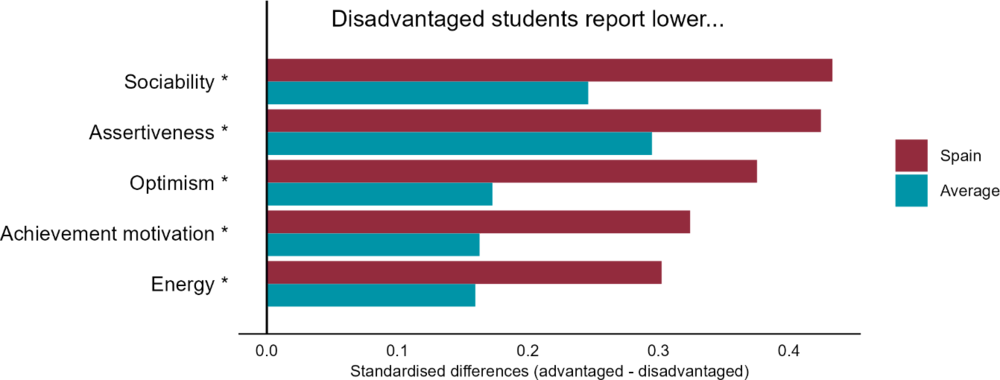
The SSES results show significant variability in socio-emotional competencies across different socio-demographic groups. For example, gender differences in competencies such as assertiveness and achievement motivation are more pronounced in Spain compared to the international average. Furthermore, disadvantaged students tend to report lower levels in all competencies assessed. Thus, the most significant findings and results of the SSES 2023 in Spain are:
Highlights of SSES 2023 in Spain:
1. Gender Differences in Socioemotional Skills
Girls demonstrated significantly lower levels in 8 of the 15 evaluated competencies compared to boys, particularly in:
Emotional balance: stress resistance, optimism, and emotional control.
Engagement with others: energy, sociability, confidence, and assertiveness.
Open-mindedness: creativity.
Boys scored lower in:
Task performance: achievement motivation, responsibility, and persistence.
Collaboration: empathy.
Open-mindedness: tolerance.
2. Socioeconomic Disparities in Socioemotional Skills
Students from disadvantaged socioeconomic backgrounds scored lower in all competencies compared to their advantaged peers, with the largest gaps observed in:
Task performance: achievement motivation, persistence, responsibility, and self-control.
Engagement with others: energy, assertiveness, and sociability.
Emotional balance: emotional control, confidence, and optimism.
3. Impact on Educational and Professional Outcomes
Skills under task performance—such as motivation, persistence, responsibility, and self-control—strongly correlated with higher academic performance.
Surprisingly, highly sociable students tended to perform worse academically, as sociability had a negative impact on grades and attendance.
Spanish students exhibited ambitious career plans: 81% aimed to complete tertiary education, with higher expectations among girls, socioeconomically advantaged students, and native-born individuals.
40% of Spanish students expressed intentions of entrepreneurship, aspiring to start their own businesses. Competencies like assertiveness, energy, creativity, sociability, and optimism were strongly linked to entrepreneurial ambition, especially among immigrant students.
4. Relationship with Well-being and Health
Competencies related to emotional balance—such as optimism and emotional control—were positively associated with better psychological well-being, life satisfaction, and healthy habits.
Students with higher levels of engagement with others and emotional balance reported lower levels of exam and classroom anxiety.
Gender disparities in health and well-being were notably wider in Spain compared to the international average. Girls reported worse outcomes across all six health and well-being measures—except relationship satisfaction—than boys.
Conclusions
The findings underscore the importance of targeted interventions to strengthen specific competencies that influence academic performance, social interactions, emotional management, and overall well-being. Key takeaways include:
Addressing disparities: Educational policies must focus on bridging gender and socioeconomic gaps in essential skills development.
Program development: Initiatives to enhance empathy, cooperation, and socioemotional education should be more effectively integrated into the national curriculum.
International benchmarking: The study provides valuable comparisons, highlighting Spain’s strengths and areas for improvement.
In the long term, SSES is expected to yield more data to shape educational policies and teaching practices. This study reflects Spain’s commitment to holistic education, recognizing the role of socioemotional skills in shaping resilient, empathetic, and capable citizens.
https://i0.wp.com/humanaitech.com/wp-content/uploads/2024/05/Captura-de-Pantalla-2024-05-23-a-las-13.43.53.png?fit=796%2C1122&ssl=11122796Juliana Mirahttps://humanaitech.com/wp-content/uploads/2022/05/Logo-180x180.pngJuliana Mira2024-12-13 18:35:082024-12-13 18:35:11SSES 2023: Social and Emotional Skills in Spain
“The aim of the regulation is to establish a professional training and guidance system that, while strengthening the competitiveness and sustainability of the Spanish economy, can flexibly respond to the interests, expectations, and aspirations of individuals for lifelong professional qualification, as well as the skills demanded by new productive and sectoral needs to enhance productivity and generate employment.” — Organic Law 3/2022, March 31, on the Organization and Integration of Vocational Training
More Vocational Training, More Opportunities
The new Vocational Training Law seeks to develop a more flexible, accessible, and certifiable FP system. Its most significant changes can be summarized in four key points:
Integration of Educational FP and Employment FP Systems The new FP system will be organized into five cumulative and progressive qualification levels, ranging from micro-courses to specialized certifications. This modular offering will allow for more flexible and personalized learning pathways tailored to students’ needs and goals.
Expansion of Dual Vocational Training With the expansion of the Dual Vocational Training model, many students will complete a significant portion of their training within companies. This approach facilitates their entry into the labor market and aligns training programs with the productive needs of each region.
Accreditation of Professional Competencies The new FP Law makes it easier for workers without official qualifications to have their professional skills recognized. Through a permanent administrative process, these workers can officially validate their work experience. Additionally, a professional guidance service will help design individual and group training pathways.
Adaptation to Business Needs In recent years, FP has become the most in-demand official training by Spanish companies. One of FP’s major challenges is bridging the gap between academia and industry. The new law incorporates proposals directly from the business sector to better align FP with the needs of the labor market. This trend is expected to grow further thanks to the new FP Law.
More FP, Better Career Guidance
The new legislation establishes and regulates a professional guidance system linked to the Vocational Training framework. The law emphasizes the importance of career guidance as a process that equips students with the knowledge and skills needed to enter and thrive in the workforce.
This guidance ensures that vocational training is not only technical but also comprehensive, preparing students to meet the current demands of the labor market. It gives them a clear and realistic understanding of their career options, helping them make informed decisions about their academic and professional futures.
The new Vocational Training Law significantly enhances career guidance at all educational levels. It expands and personalizes guidance services, ensuring every student receives an initial assessment to align their skills, interests, and aspirations with market demands. The law also promotes proactive career planning and stronger collaboration with businesses, improving the transition from education to employment. Additionally, it reinforces support and continuous training for guidance counselors, equipping them with up-to-date knowledge on market trends and new teaching methodologies, solidifying the relevance of career guidance in FP.
This alignment of individual competencies with sector-specific needs enables more effective career guidance, where individual skills are assessed and enhanced to adapt careers to market trends and personal interests. Continuous evaluation and adaptation of these programs are crucial for maintaining their relevance and effectiveness.
Success Story: Career Guidance and Socio-Emotional Competencies
Following the approval of Organic Law 3/2022, the Centro Integrado de Formación Profesional del Mar—Spain’s only Vocational Training center specializing in the maritime and fishing sectors—undertook a comprehensive overhaul of its curriculum. The two vocational modules, Training and Career Guidance and Entrepreneurship and Business Initiative, were retained but renamed and restructured as Personal Employability Pathway I and II.
The CIFP del Mar is committed to the importance of training and self-training in social and emotional skills (SES) using the OCEAN model (Openness, Conscientiousness, Extraversion, Agreeableness, and Neuroticism), also known as the Big Five framework by the OECD. Socio-emotional competencies are vital for lifelong learning and the ability to “learn, unlearn, and relearn.”
CIFP del Mar and Human AI
CIFP del Mar integrates a project within its training cycles to analyze, evaluate, and develop socio-emotional competencies using the artificial intelligence tool Human AI Tech. This initiative represents an educational transformation, utilizing AI to assess and enhance students’ emotional and social skills.
Human AI generates individualized reports highlighting each student’s strengths and areas for improvement in socio-emotional competencies based on natural language text. These reports become an integral part of the educational process throughout the academic year. Activities tailored to this data enable students to consciously address areas for improvement while reinforcing their strengths.
Teachers and tutors at CIFP del Mar use these reports to integrate the data into both theoretical and practical training. This approach ensures a smoother transition of knowledge and skills from the classroom to the workplace, providing students with a solid foundation for professional growth.
The methodology also includes specific activities designed to address individual student needs identified through Human AI Tech. These activities not only enhance classroom learning but also prepare students for real-world challenges, improving their employability and adaptability in the labor market.
Building the Future
CIFP del Mar’s experience demonstrates how integrating advanced technologies and personal development-focused pedagogies can significantly enrich vocational training. This case highlights the importance of adapting education to future labor needs while establishing a replicable model for incorporating socio-emotional competencies into curricula. This proactive approach ensures students are not only technically proficient but also emotionally and socially equipped to succeed in any professional environment.
https://i0.wp.com/humanaitech.com/wp-content/uploads/2024/05/PB110705.jpeg?fit=1024%2C768&ssl=17681024Juliana Mirahttps://humanaitech.com/wp-content/uploads/2022/05/Logo-180x180.pngJuliana Mira2024-12-13 18:10:422024-12-13 18:10:45New Vocational Training Law: Transforming Career Guidance in Spain
On June 11, the results of the 8th edition of the Innova Program were announced. Out of 257 submitted initiatives, 59 organizations were selected to implement their projects in the social, cultural, and rural sectors. Among them is “CompetencIA. North-South Women’s Adaptive Sports: AI for Developing Socio-Emotional Skills”, an innovative and inclusive project spearheaded by Asociación SAMAY, Human AI Tech, and Asociación Innovactoras. This initiative focuses on inclusive sports and technological innovation.
The CompetencIA project will launch in October 2024 and run until August 2026 in two distinct contexts: Navarra, Spain, and Quetzaltenango, Guatemala. Its primary goal is to foster the development of socio-emotional skills by combining adaptive sports with artificial intelligence.
Innovative, Inclusive, and Social Projects
The Innova Program, led by Fundación Caja Navarra and Fundación “la Caixa,” aims to support projects that promote innovative, inclusive, and social development in the Autonomous Community of Navarra, aligned with the United Nations’ 2030 Agenda for Sustainable Development Goals (SDGs).
This program seeks to encourage transformative social, cultural, and local initiatives. It fosters training, critical reflection, collaboration across entities and sectors, and provides financial support to projects that advance inclusion and sustainable development goals.
Inclusive Sports, Humanized Technology: Goals of the CompetencIA Project
1. Inclusion and Humanized Technology
Adaptive sports serve not only as a powerful tool for social inclusion but also as a platform for developing essential socio-emotional skills. With the support of artificial intelligence, this project aims to maximize these benefits, offering participants an enriching and transformative experience.
2. International Implementation and Validation
Between 2025 and 2026, the project’s AI tool will be validated in two different settings:
Navarra, Spain: Collaboration with 80 athletes with disabilities.
Quetzaltenango, Guatemala: Engagement with 80 young individuals with disabilities in a rural context through SAMAY’s Adaptive Sports Camps.
3. Focus on Gender Equality
A key feature of CompetencIA is its emphasis on female inclusion. Approximately 60% of participants will be women. Additionally, the project will introduce new recognition categories in the Innovactoras Awards to honor outstanding women in this field.
4. Publications and Recognitions
In 2026, a book will be published celebrating the women recognized through the project and presenting its scientific findings. This publication will serve as a valuable reference for future research and practices in adaptive sports and artificial intelligence.
Sustainable Development Goals
The CompetencIA project aligns with several goals and targets of the 2030 Agenda:
Promoting mental health and socio-emotional well-being (SDG 3): Through adaptive sports, the project strengthens participants’ mental health and socio-emotional competencies. Sports serve as a powerful tool for personal and emotional development.
Encouraging technology use while advancing gender equality (SDG 5): By integrating artificial intelligence and information and communication technologies (ICT), the project fosters a more inclusive and equitable environment. Humanized technology plays a pivotal role in closing the gender gap.
Ensuring equal opportunities for all (SDG 10): The initiative focuses on creating equal opportunities regardless of gender, geographical location, or physical abilities. It will involve 160 athletes with disabilities committed to unlocking their full potential.
We anticipate that CompetencIA will have a significant impact on the communities involved, transforming lives through adaptive sports and artificial intelligence. By promoting inclusion, equality, innovation, and socio-emotional development, we aim to build a more humanized society. Are you ready to join us?
As the project unfolds, we’ll share updates and results with our community on social media.
https://i0.wp.com/humanaitech.com/wp-content/uploads/2024/06/Reunion-proyecto-Competencia.jpeg?fit=1280%2C960&ssl=19601280Juliana Mirahttps://humanaitech.com/wp-content/uploads/2022/05/Logo-180x180.pngJuliana Mira2024-12-13 17:58:022024-12-13 17:58:05Transforming Lives Through Sports and AI
The multidisciplinary R&D team at Human AI met on June 19 with representatives from national and international educational institutions to discuss progress in the TutorIA project.
Participants included experts from Human AI, researchers from the University of Navarra, and representatives from participating educational centers: Jesuitinas (Pamplona), Irabia-Izaga (Pamplona), Goierri (Ordizia), CIFP del Mar (Gijón), CEE El Molino (Pamplona), and the Itinere Network (Argentina and Uruguay).
The project’s goal is to develop artificial intelligence solutions that support teachers in evaluating and fostering students’ socioemotional skills. This initiative integrates scientific research and innovations addressing the challenges of ethical and responsible AI in assessing and developing socioemotional competencies. Additionally, it validates new evidence-based educational methodologies in collaboration with field experts.
European Regulation
Juan Carlos Hernández, an expert in European regulatory frameworks at the University of Navarra, opened the meeting with a presentation on the new EU regulatory framework for artificial intelligence. He explained the implications of consent requirements and the ethical concerns expected to arise in the upcoming school year.
“I think the issue of European regulation has created a lot of uncertainty for us. It’s reassuring to have this information and know we’re working within an ethical and legal framework,” said Diego Ezcaray, Pedagogical Director of Jesuitinas School.
Hernández emphasized that European regulations focus on ensuring AI systems are safe and respect fundamental rights. He noted that many current concerns relate to generative AI, such as ChatGPT, due to its probabilistic nature. “Artificial intelligence must focus on people and be transparent, ethical, and technically sound,” he stated.
Academic Journey
Dr. Beatriz Abad, R&D Projects Coordinator at Human AI, provided a summary of the conferences and academic events where Human AI has participated:
CIECEM 2024, the First International Congress on Artificial Intelligence, Innovation, Economy, and Business: “The Impact of Artificial Intelligence on Knowledge Economy Businesses.”
Íñigo Benito, Head of Innovation and Co-Design at Human AI. Shared relevant data from the OECD 2023 Socioemotional Skills Study, contrasted with findings from Human AI’s research.
Dr. Abad also highlighted the importance of collaboration with DATAI, ICS, and the School of Education and Psychology at the University of Navarra. Collaborations that have been instrumental in advancing the integration of research.
Collaborative Research
Drs. Martín Martínez and Elkin García from MIPAC presented preliminary results from the PersonIA Project, emphasizing its complementarity with linguistic findings by Dr. Dámaso Izquierdo from ICS and AI language model experimentation led by Dr. Horacio Grass at DATAI. This multidisciplinary approach enables a deeper understanding of socioemotional skills and their development.
Martínez and García highlighted how comparisons with traditional tools in educational and clinical populations have yielded valuable insights. They stressed the importance of collaboration across disciplines to validate new methodologies in the TutorIA project.
Educational Focus
A significant portion of the meeting focused on evaluating the perspectives of each participating center regarding the project’s impact on tutoring, employability, and teaching.
Representatives from Jesuitinas, Irabia-Izaga, Goierri, CIFP del Mar, CEE El Molino, and the Itinere Network discussed how AI will redefine expectations for educational institutions, emphasizing the need for tools and trained personnel to guide students in developing socioemotional skills.
Educational center representatives shared concerns and experiences, underscoring the importance of having adequate resources to implement new methodologies.
Drs. Dolores Conesa and Elena Arbués, representing the Education, Citizenship, and Character team, presented the conceptual framework and summarized the scientific evidence gathered throughout the year. This work provides actionable recommendations for fostering socioemotional development in educational settings.
Key Partnerships
The meeting successfully strengthened the collaborative efforts between Human AI and educational centers to develop ethical and responsible AI solutions. María Beúnza, CEO of Human AI Tech, concluded by emphasizing the importance of these partnerships in validating new methodologies and advancing socioemotional skills development based on scientific evidence.
“The path to validating new methodologies like this is a convergence of various efforts through partnerships with research and innovation teams: conceptual and regulatory frameworks, traditional tool comparisons, linguistics, consistency with scientific evidence, state-of-the-art AI, and validation by field professionals,” stated Beúnza.
For more information about the TutorIA project and other innovative initiatives, visit humanaitech.com
https://i0.wp.com/humanaitech.com/wp-content/uploads/2024/06/Captura-de-Pantalla-2024-06-27-a-las-16.47.36.png?fit=1920%2C859&ssl=18591920Juliana Mirahttps://humanaitech.com/wp-content/uploads/2022/05/Logo-180x180.pngJuliana Mira2024-12-13 17:38:402024-12-13 17:38:44TutorIA Project: Multidisciplinary R&D Team and Educational Centers
The project “TutorIA for the Assessment and Development of SES” (socioemotional skills) was selected in the VII CaixaBank Dualiza and FPEmpresa Call for Proposals. TutorIA is one of the thirty innovative projects chosen for implementation. Furthermore, it highlights the importance of socioemotional assessment using AI to enhance personal development and improve the employability of vocational training (VT) students.
Integrating AI into Socioemotional Assessment
The primary goal of the TutorIA project is to evaluate and develop socioemotional skills (SES) in vocational training students to boost their employability.
One of TutorIA’s standout features is the application of the Human AI tool. This artificial intelligence technology enables precise and efficient assessment of students’ skills, facilitating continuous and personalized feedback. Human AI has become a key component in identifying areas for improvement and enhancing students’ abilities, contributing to their holistic development.
Methodology and Approach
The TutorIA project combines constant assessment with the development of SES. This approach focuses not only on academic performance but also on the personal and professional growth of students.
Human AI – Expert-Validated AI Tool:
Understanding Text and Relationships: Thanks to algorithms trained in psycholinguistics and psychometric tests.
Generating Personalized Reports: Based on the OCEAN model (Openness, Conscientiousness, Extraversion, Agreeableness, and Neuroticism).
Holistic Evaluation: Ensuring that every student receives the attention and support needed to reach their full potential.
Project Development
Initial Implementation
In February 2024, all students from the Aspasia VT centers participated in the project’s first phase, using Human AI to evaluate their socioemotional skills. Each student wrote a text of at least 800 characters, which the tool analyzed to generate a personalized report. This report provided a detailed evaluation of the five traits in the OCEAN model, highlighting strengths, areas for improvement, and offering recommendations and activities for personal and professional development.
Application of Didactic Guides
During the final months of the academic year, didactic guides and classroom activities were developed and implemented to strengthen SES. These activities were designed to enhance the five factors of the OCEAN model and its 30 facets. Teachers and students provided feedback on the materials used, enabling improvements for future applications.
Final Evaluation
At the end of the school year, students completed a second assessment using Human AI. Although the time between evaluations may have been too short to observe significant changes, in some cases, improvements in skill development were noted.
Impact and Future of the Project
The TutorIA project has not only benefited students from Aspasia VT centers but also created teaching materials accessible to other educators through the web. This project demonstrates innovation and promotes collaboration among institutions, social impact, coordination and communication, and long-term sustainability.
Focusing on improving socioemotional skills is essential for students’ employability and personal development, better preparing them for the workplace. The Human AI tool plays a critical role in this process, offering precise analyses while avoiding self-perception biases and social desirability effects.
Through the commitment of teachers and students at these centers and the application of Human AI, a sustainable and transferable model has been created that will continue to benefit future students and educators.
https://i0.wp.com/humanaitech.com/wp-content/uploads/2024/06/proyecto-tutori-ia-lenguaje-natural-3.webp?fit=1738%2C1288&ssl=112881738Juliana Mirahttps://humanaitech.com/wp-content/uploads/2022/05/Logo-180x180.pngJuliana Mira2024-12-13 16:29:262024-12-13 16:29:30Socioemotional Assessment with AI in Vocational Training
I feel sadness, therefore it exists. I feel anger, therefore it exists. I feel anxiety, therefore it exists.
Knowing that something exists, becoming aware of it, understanding it—this allows us to accept it, comprehend it, and ultimately be capable of managing it. The first lesson brought to us by the animated characters of Inside Out 2—the recently released film filling our social media feeds and conversations—is to become aware of their existence.
The next step we should aspire to is: “I feel, therefore I think, therefore I decide.” Thus, Inside Out 2 offers both the young and the not-so-young an opportunity to reflect on the importance of self-awareness and socioemotional development, to be capable—with the right tools—of managing this profoundly human dimension.
Emotional Self-Awareness
As we grow, emotions emerge. Reality impacts us, and our affectivity enters into crisis as it shapes our emotional maturity: joy, sadness, anger, disgust… The transition from childhood to adolescence introduces the need to integrate new and diverse emotions into our inner world: shame, envy, boredom, anxiety…
Beyond the cinematic narrative, in real life, the socioemotional development of children is a crucial process for their growth. It’s not just about feeling, but also about being aware, understanding, expressing, and managing those emotions to make firm decisions without depending on emotional volatility.
This skill is vital for the development of a balanced personality. Equipping adolescents with the right tools to manage these emotions not only enhances their socioemotional well-being but also lays the foundation for a more fulfilling and satisfying adult life.
Seeing emotions personified helps us become aware of them, recognize them, and understand them—in essence, to acknowledge their existence. Validating and recognizing each emotion gives visibility to its purpose, even when they initially discomfort, bother, or unsettle us.
The internal dynamics that emerge propel us to face life’s challenges and allow us to understand and manage our emotions in an integrated and healthy way. In the end, emotions accompany our decisions; some help us, others hinder us. The key lies in integrating them so they enable us to achieve personal growth.
International Study on Socioemotional Development in Adolescents
We can evaluate academic performance, theoretical knowledge, intellectual development… but what about socioemotional well-being? Do we have the tools to assess this human dimension? Can we delve into our minds without relying on animated characters?
The recent OECD study on social and emotional skills precisely identifies and evaluates the conditions and practices that foster or hinder the development of these skills in students aged 10 and 15. This study has the mission to:
Raise awareness of the fundamental role of social and emotional skills.
Evaluate the social and emotional skills of children aged 10 and 15.
Provide insights into how these skills develop and influence academic success, employability, active citizenship, health, and well-being.
The SSES Study is based on a well-known theoretical framework in the field of social and emotional competencies: the Big Five Model (OCEAN). These five broad categories are further divided into various competencies:
Task performance: self-control, responsibility, and persistence.
Emotional balance: stress resilience, optimism, and emotional control.
Collaboration: empathy, trust, and cooperation.
Open-mindedness: tolerance, curiosity, and creativity.
Engagement with others: sociability, assertiveness, and energy.
Additional indices include achievement motivation and self-efficacy.
This framework enables the assessment of this deeply human and essential dimension in students through various tools. But how? Are there specific tools?
Human AI Tech: A Technological Ally in Socioemotional Development
Evaluating and fostering socioemotional well-being is crucial, but not always easy. This is where Human AI becomes an indispensable ally. Human AI leverages psycholinguistics, psychometric tests, and artificial intelligence to provide a precise and in-depth assessment of socioemotional competencies.
Human AI helps identify areas for improvement and strengths in emotional skills, offering a clear path for personal growth. The tool evaluates various competencies based on the student’s written (or transcribed) text, enabling educators to better understand the socioemotional needs of children and adolescents.
Additionally, Human AI aligns with the OCEAN model, providing a comprehensive evaluation that covers the five major dimensions of personality. This allows for a holistic understanding of socioemotional development and provides personalized strategies for the emotional and personal growth of each individual.
If you want to learn more about evaluating and developing the socioemotional dimension, explore Human AI Tech.
https://i0.wp.com/humanaitech.com/wp-content/uploads/2024/07/Desarrollo-socioemocional.webp?fit=1200%2C675&ssl=16751200Juliana Mirahttps://humanaitech.com/wp-content/uploads/2022/05/Logo-180x180.pngJuliana Mira2024-12-13 16:15:282024-12-13 16:15:31I Feel Emotions, Therefore I Am